Buying Feed Roller for HP: A Field Guide for Copier Repair Shops
For copier repair shops, HP feed roller failures are a reliable revenue stream—but only if you source components that actually hold up. A roller that skips, squeaks, or disintegrates after 5,000 pages costs you callbacks and credibility. This guide covers what to look for when buying HP feed rollers, how to inspect them on arrival, and why working with a factory like CLONER can save you from the headache of inconsistent aftermarket parts.
Know the HP Families That Eat Feed Rollers
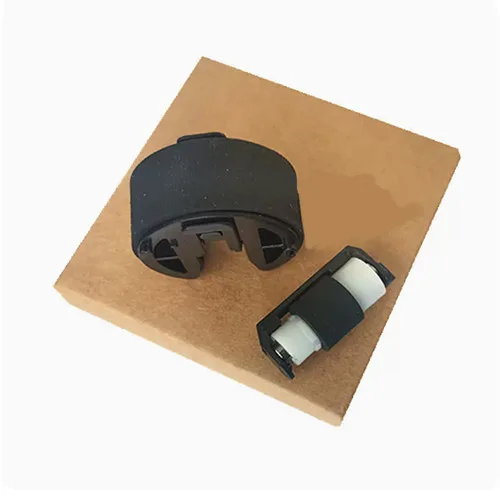
HP's LaserJet and PageWide lines use different roller designs, so you must match the exact part number. The HP LaserJet Pro M402/M403 series uses a pickup roller and separation pad that are notorious for wearing out around 50,000 pages—especially in dusty environments. The MFP M477/M527 models share a similar feed system but with a different torque spec on the separation roller. If you service OfficeJet Pro 8700 or PageWide 477dw, the feed roller assembly is a single unit that includes both pickup and separation rollers; replacing just one piece invites misalignment.
Don't rely on memory. Check the HP parts manual or the existing roller's part number. A common mistake is buying a roller for the M452 and trying it on the M477—they look identical but have different shaft diameters. Measure the shaft with calipers if you're unsure. A 0.1mm difference can cause the roller to slip on the drive gear.
What to Inspect Before You Install
Even from a reputable supplier, inspect every batch. The first thing to check is the rubber surface. OEM HP rollers have a slightly rough, matte finish that provides grip without grabbing the paper too hard. If a roller is glossy or tacky, it's either over-cured or made from low-grade EPDM. That gloss will cause paper jams on the first pass. Also, check hardness with a durometer if you have one—OEM spec is around 55 Shore A. Softer wears out fast; harder can damage the paper path.
The shaft is the next critical point. It should be straight and free of burrs. A bent shaft causes the roller to wobble, leading to uneven wear and premature failure. Spin the roller on a flat surface—if it wobbles, reject it. Also, verify the bushing or bearing is properly seated. On HP models with a separate pickup roller (like the M402), the bushing is part of the roller assembly. If it's loose, the roller will rattle and eventually crack the frame.
Finally, check the packaging. Rollers should be individually wrapped or sealed in a bag with desiccant. If they're loose in a box, they can deform or pick up dust. We've seen aftermarket rollers arrive with a permanent flat spot from being stacked—they'll never perform correctly.
Why Factory-Direct Beats Generic Aftermarket
Generic aftermarket feed rollers are cheap, but they're a gamble. Many are made from recycled rubber compounds that lose elasticity in extreme temperatures. If your customer's office is in a hot climate or the machine sits near a window, those rollers will harden and crack within months. Factory-direct sourcing, like what CLONER offers, means you're getting rollers made from virgin EPDM or NBR compounds, cured to the same hardness and dimensional specs as the OEM part.
Another factor is batch consistency. A generic supplier might change their rubber supplier mid-production, and you'll get a roller with a slightly different coefficient of friction. That can cause intermittent feeding issues that are a nightmare to diagnose. With a factory that controls the entire process—from compound mixing to molding to final inspection—you get uniform quality batch after batch. That's why more repair shops are switching to factory-direct for high-turnover parts like feed rollers.
For buyers, this also means better pricing. When you cut out the middleman, you can afford to stock more units and offer competitive service contracts. And if you have a high-volume client with a fleet of HP machines, you can even get custom branding on the rollers or a dedicated SKU—something an importer can't do.
Ordering Terms That Protect Your Business
When ordering feed rollers in bulk, negotiation matters. Get a sample batch first, even if it's just 5 pieces. Test them on the actual models you service. Look for a supplier that offers a warranty—at minimum, a 6-month replacement policy against defects. CLONER backs every order with a 12-month warranty, which shows confidence in the product.
Also, clarify the lead time and shipping method. Air freight is fast but expensive; sea freight is cheaper but can take 30 days. For a part as critical as feed rollers, consider a hybrid: order a small air-freight batch to keep you running, then a larger sea-freight order for stock. And always ask for the MSDS (Material Safety Data Sheet) for the rubber compound—if a supplier can't provide it, that's a red flag.
Finally, check the minimum order quantity (MOQ). Some factories require 500 units, which might be too much for a small shop. CLONER offers flexible MOQs, starting at 100 pieces, so you can test the waters without overcommitting.
Making the Switch to CLONER
If you're tired of inconsistent aftermarket rollers and want a reliable supply chain, CLONER is worth a look. We're a factory that specializes in printing consumables and copier spare parts, and we've been supplying the B2B market for over 15 years. Our HP feed rollers are manufactured in-house, with strict QC checks on every batch. We offer OEM and ODM options—if you want your brand on the roller or a custom package, we can do that. And because we're factory-direct, you get competitive pricing without sacrificing quality. Contact us for a sample kit and see the difference for yourself.