Samsung Pickup Rollers: MOQ, Lead Time, and QC That Actually Matters
You've been burned by Samsung pickup rollers that slip, crack, or die inside a month. That last batch from an online marketplace had a 30% return rate, and every comeback ate your margin. The roller for an SCX-4200 is not the same as the one for a MultiXpress C9201, and most suppliers won't tell you that until it's too late. Here's what you need to know before you place the next order.
MOQ: What's Real and What's Not
Most Chinese factories won't quote you under 500 pieces per model. For a single repair shop, that's two years of inventory sitting on a shelf. CLONER sets MOQ at 100 pieces per model for standard pickup rollers—enough bench stock without tying up cash. If you want custom packaging or your logo, MOQ moves to 500 pieces. Mixed pallets work too: ten different Samsung models at 100 pieces each, as long as the total order clears $2,000. No hidden fees, no sample charge that vanishes when you order 10,000.
Watch for the bait-and-switch. Some suppliers quote 100 pieces, then claim the model you need is 'special order' and push the MOQ to 1,000. Ask upfront which models are truly stock items and which are made to order. Get it in writing.
Lead Time: Don't Get Burned by 'In Stock'
'In stock' means different things to different suppliers. For CLONER standard rollers for Samsung ML, SCX, and MultiXpress series, we keep 5,000–10,000 pieces on the shelf. Orders under 1,000 pieces ship in 3–5 working days. Between 1,000 and 5,000 pieces, expect 7–10 days. Custom OEM orders take 15–20 days after artwork approval.
Air freight via DHL or FedEx gets to your door in 5–7 days, but you pay for the speed. Sea freight to the US or Europe runs 25–35 days and drops your per-piece cost by 40%. Plan around Chinese New Year—production shuts down at least two weeks, so place your November order before the window closes.
QC: The Tests That Separate Good Rollers from Garbage
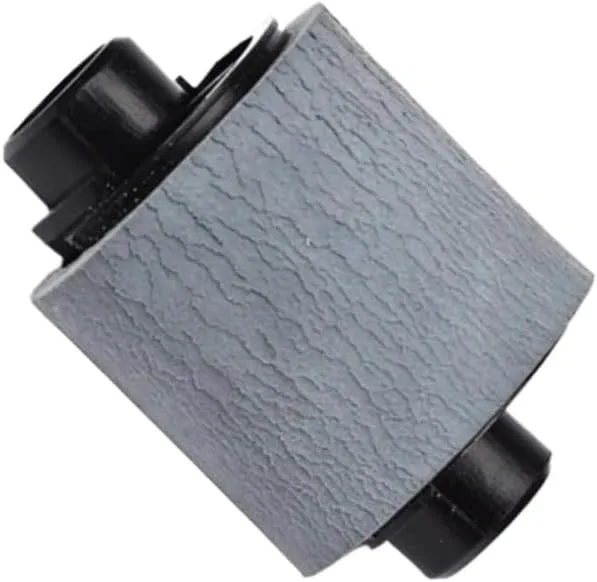
You can't judge a pickup roller by looking at it. The rubber compound decides everything. Cheap rollers use EPDM loaded with filler—they harden in six months and start slipping. CLONER uses a nitrile blend with a Shore A hardness of 65–70, tested every batch for compression set, abrasion resistance, and ozone cracking. When your order lands, run these checks:
- Measure outer diameter with calipers. It should match OEM spec within 0.1mm.
- Inspect the rubber surface for mold flash or uneven texture—that causes feed problems.
- Install one roller and run 5,000 sheets. If it slips before 3,000, reject the batch.
- Verify the shaft material. Plastic shafts wear out fast; ours are metal with a nylon coating.
- Look for a batch code. No traceability means no accountability.
Model Coverage: What You Need to Stock
Samsung's copier line overlaps in confusing ways. The SCX-4200, SCX-4300, and SCX-4500 share a pickup roller. The SCX-4600 and SCX-4623 use a different one. MultiXpress C9201, C9251, and C9301 share a roller, but the CLX-9201 takes another. Don't guess—get a cross-reference sheet from your supplier. CLONER provides a free PDF with all Samsung pickup roller part numbers and compatible models.
If you see 20–30 different Samsung machines a month, stock the top 10 rollers and you'll cover 80% of your jobs. That's the difference between chasing parts and fixing machines.
Why Factory-Direct Matters for Repair Shops
Trading companies add 20–30% to your cost. CLONER is a factory—we injection-mold the rubber, stamp the metal shafts, and assemble in-house. That control shows up in quality and price. For shops doing 50+ Samsung machines a month, we offer OEM/ODM: your logo on the box, your part number on the label, no extra tooling cost.
We also send free samples. You pay shipping, we cover the roller. If it fails your test, we refund the shipping. That's how confident we are in our Samsung pickup rollers.